Moog Music Voyager
The Voyager was the top of the line Moog product for many years. It was built from 2002 to 2015 in about 14,000 instruments. The end of this iconic new Moog was announced on the 30th of September 2015.
My Voyager is equipped with the Rudi Linhard Lintronics Slew-Rate Modification for a more brighter and more vintage like oscillator sound. Some OP-amps and capacitors of the analog board were limiting the higher frequency content of the oscillators. The modified sound is way more pleasing than the original Voyager overall sound to my ears.
I also got the Lintronics Aftertouch Modification for a superb aftertouch function of very detailed reaction on pressure. And I installed the 3.x hardware upgrade by Moog Music in my Voyager myself years before these mods.
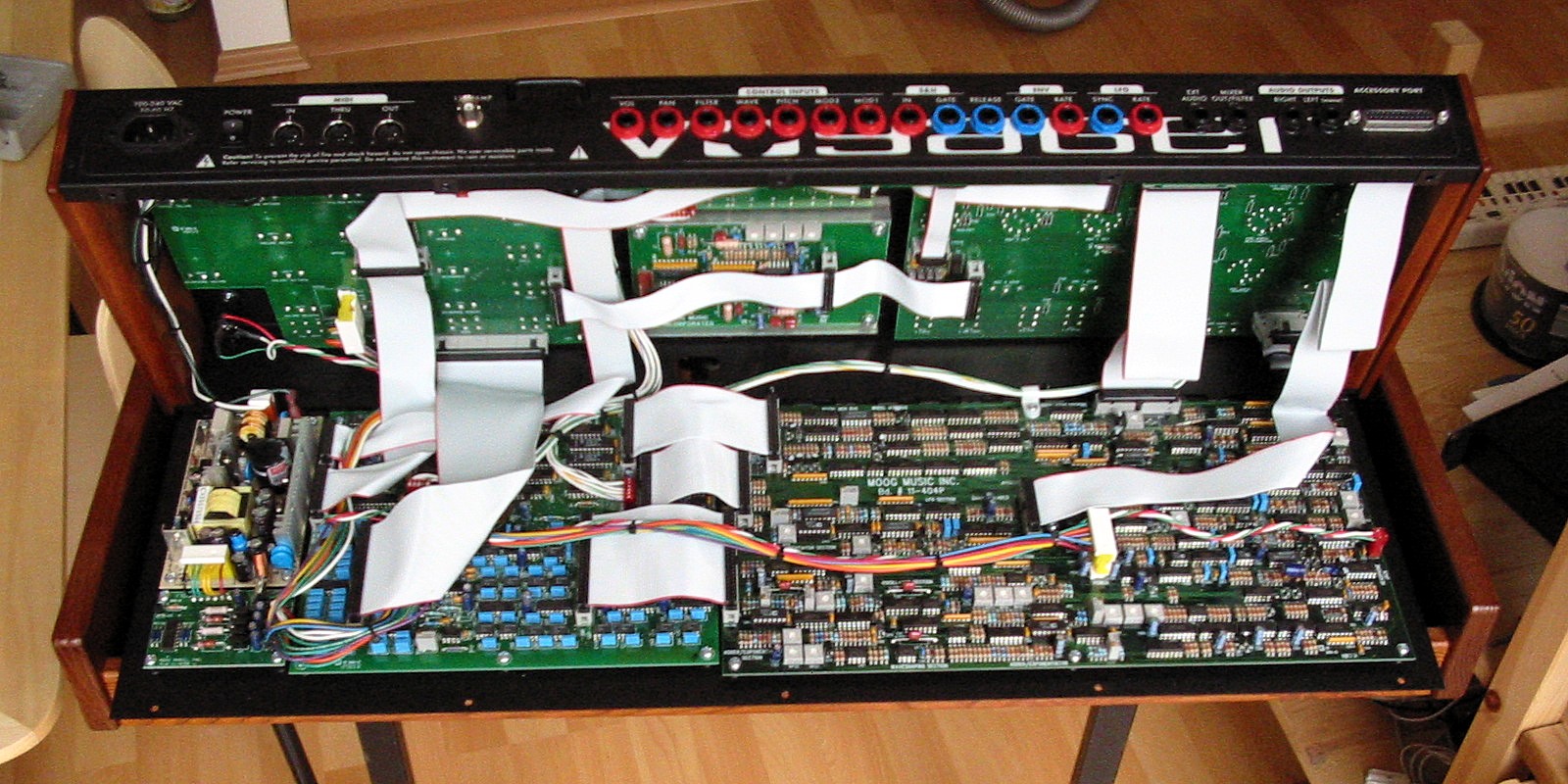
On the left there is the power supply (3rd party board) and a little power supply board that might generated the additional voltages not available on the power supply:
- +15 V - only wired to the analog board
- +12 V with its own ground routed to the BNC lamp connector on the back
- +10 V
- +5 V labled +5A (= +5 V analog)
- +5 V labled +5D (= +5 V digital)
- Ground
- -5 V
- -10 V
- -15 V - only wired to the analog board
All cables used as ground are coloured green
In the big horizontal board on the right is the analog board. And the board left of it (the one with those many blue caps) is the old digital board:
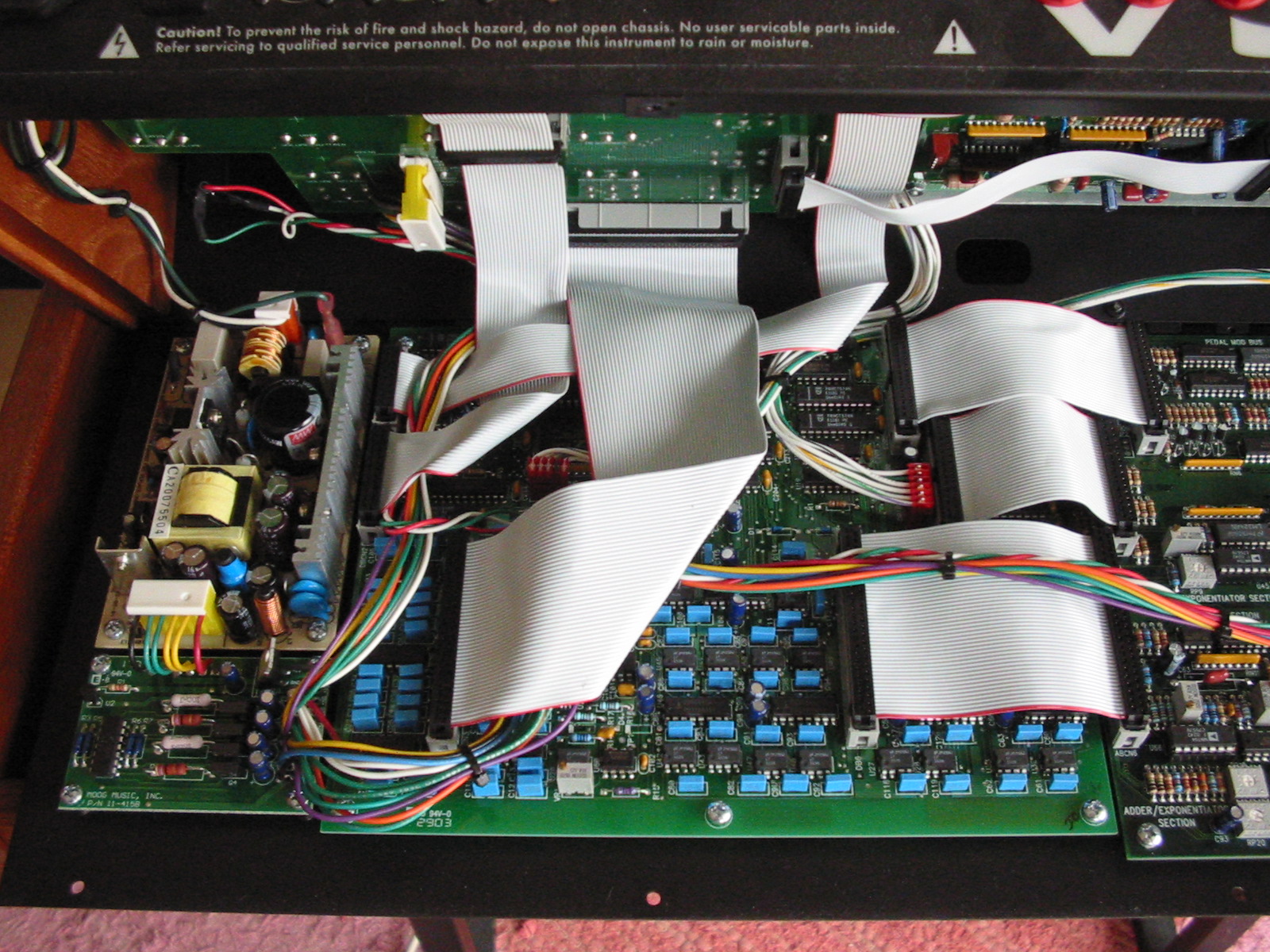
The Voyager before the 3.x hardware upgrade
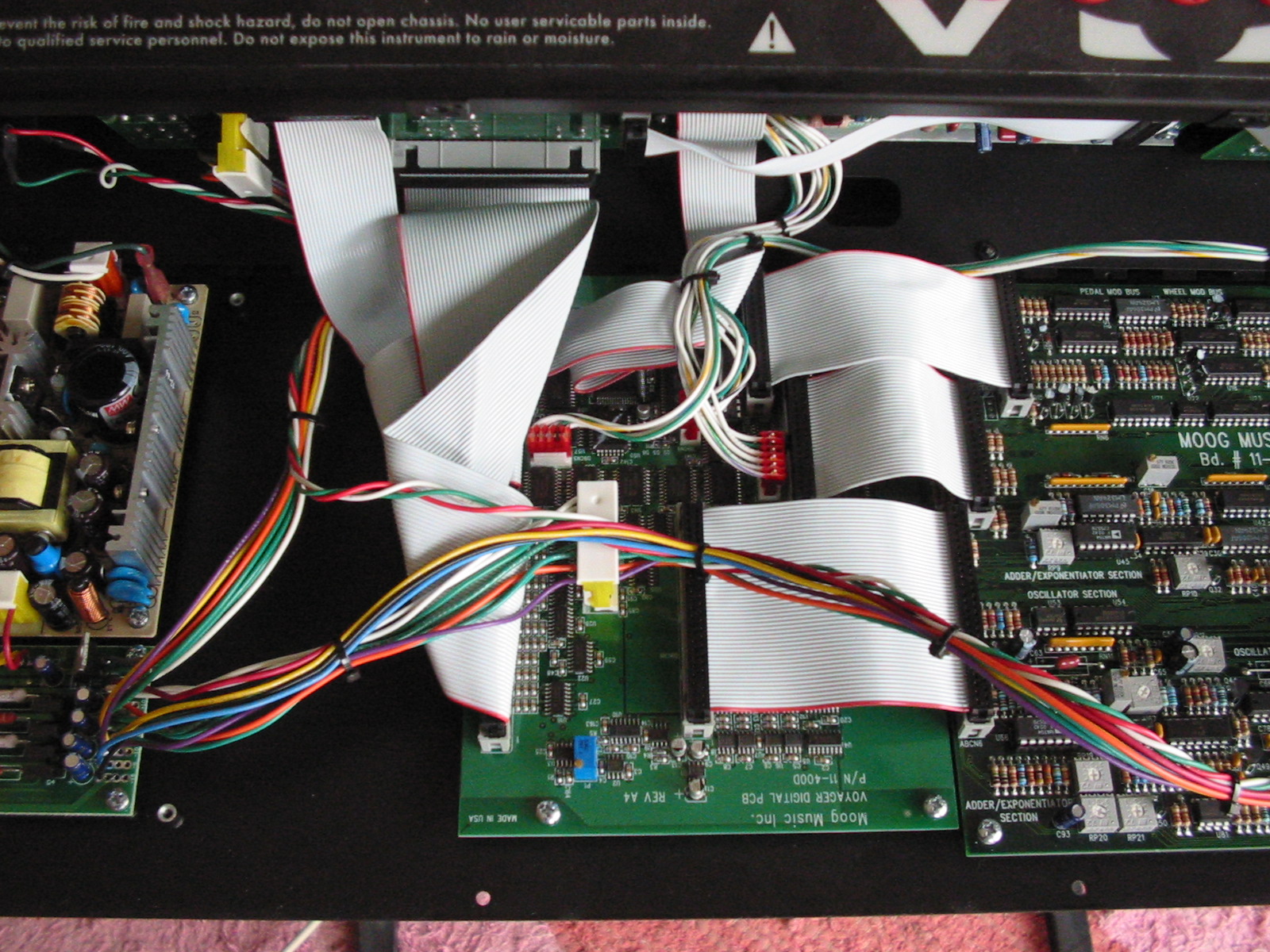
And here the very same Voyager after the 3.x hardware upgrade. Notice the SMD components and the smaller footprint.
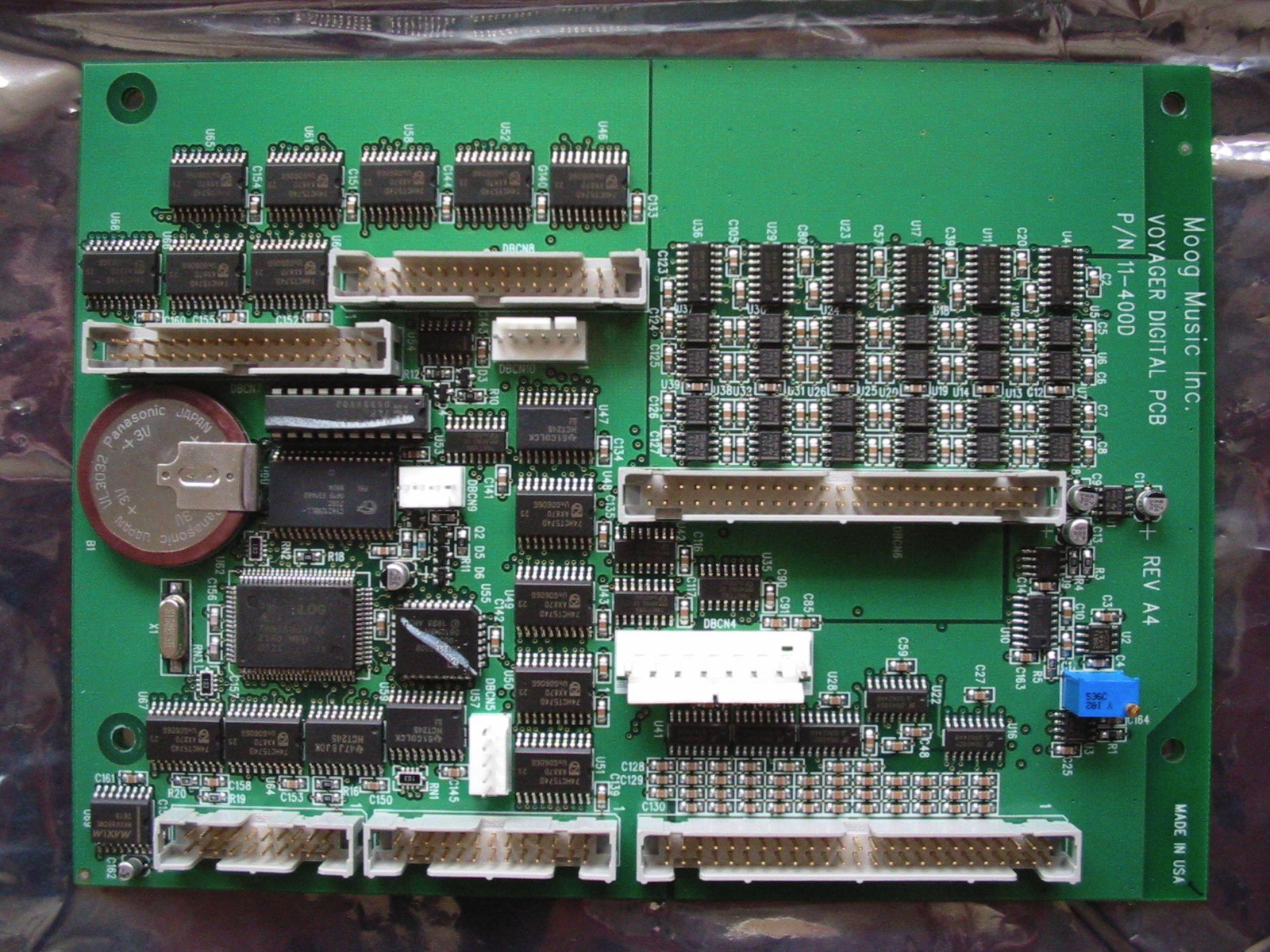
The new 3.x digital board before the upgrade.
I spotted under the widest flat cable going from the digital board (bottom left) to the panel:
- Battery: size/type 3032 (3 Volt)
- ZiLOG Z180 MPU "Higher performance version of Z80 MPU, with 1MB memory addressing"
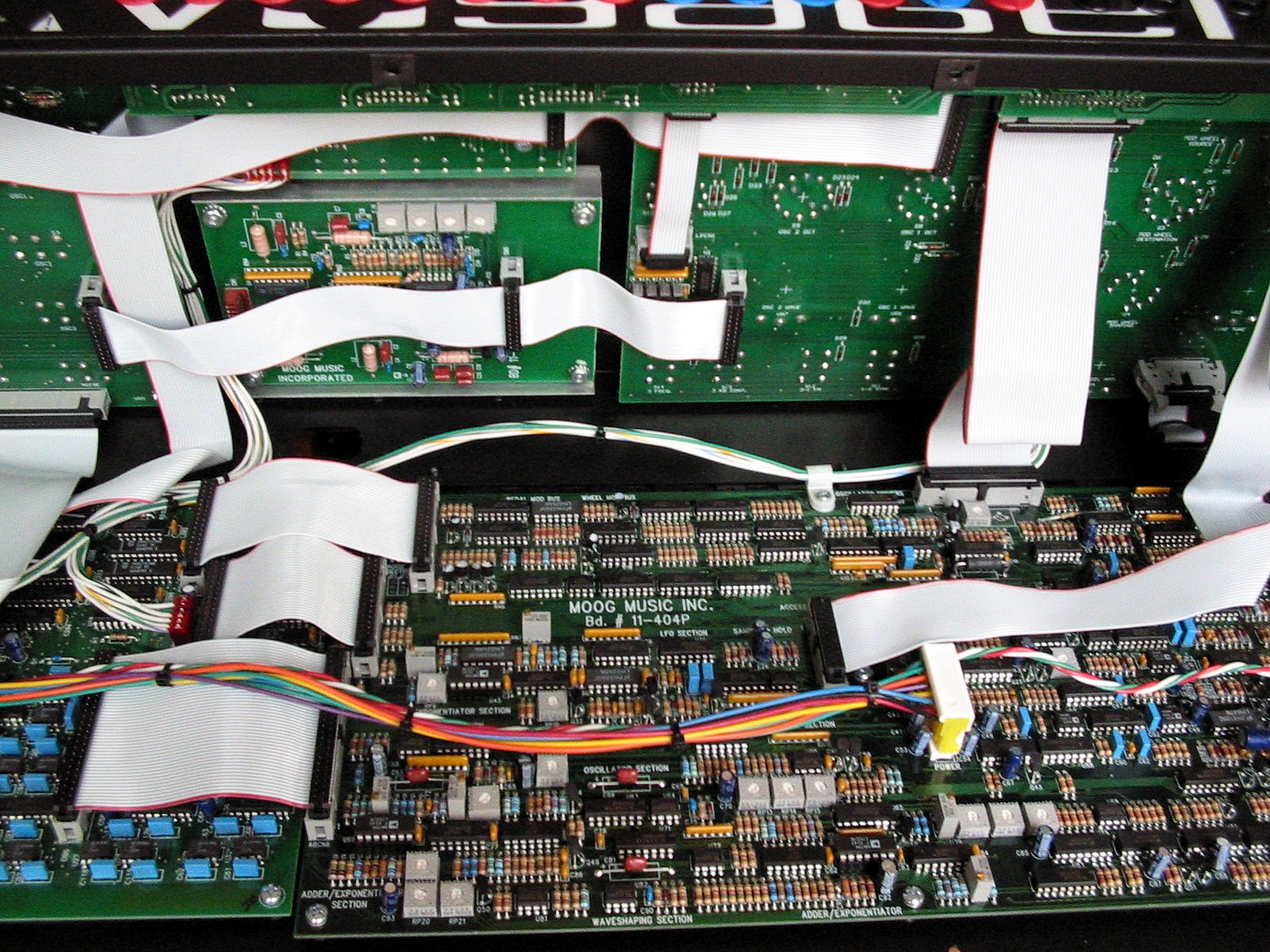
There are more wires than inside a PPG wave 2.2 or 2.3 !
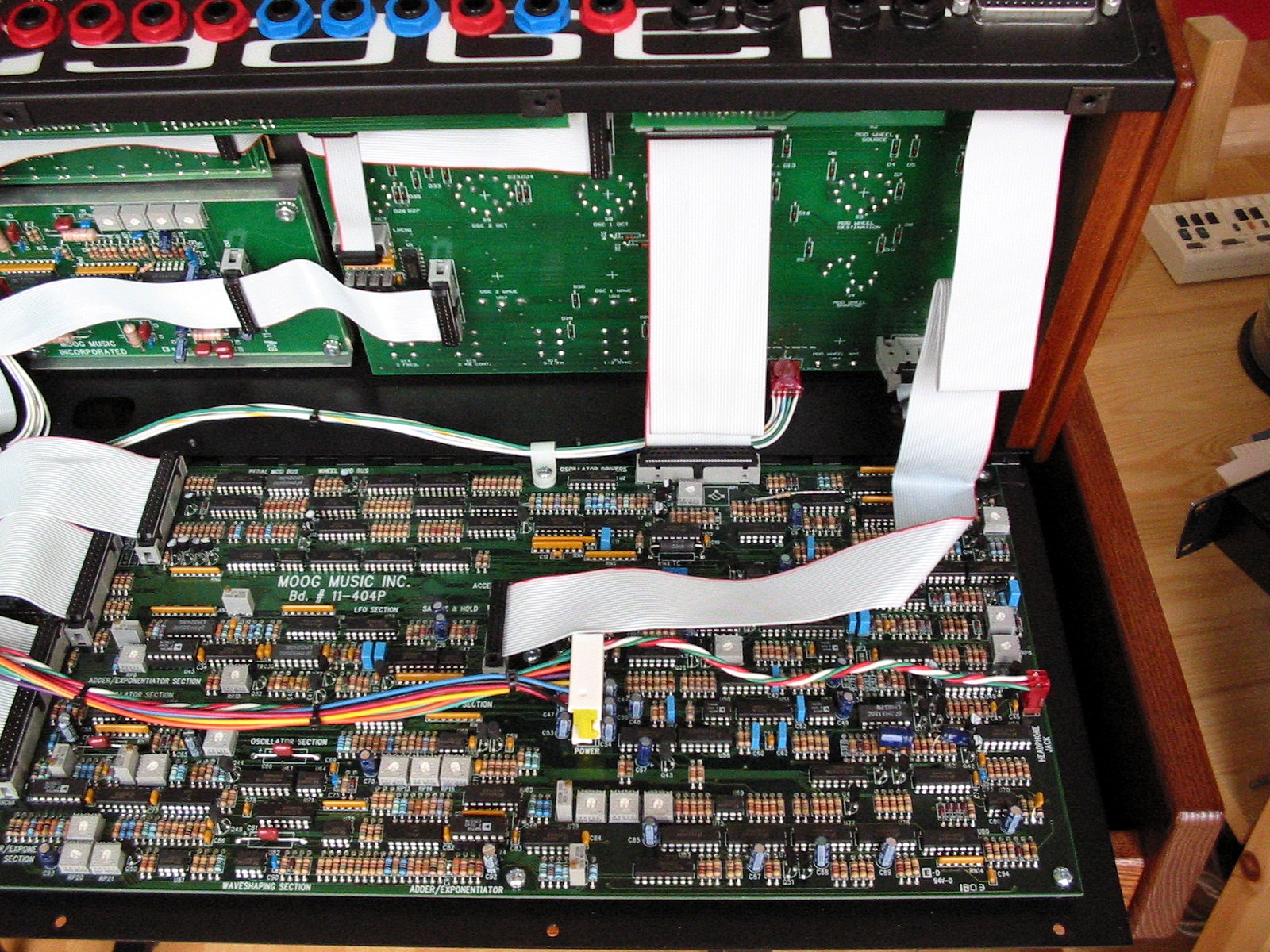
The big analog board (20 x 38 cm / 8 x 15 inches)
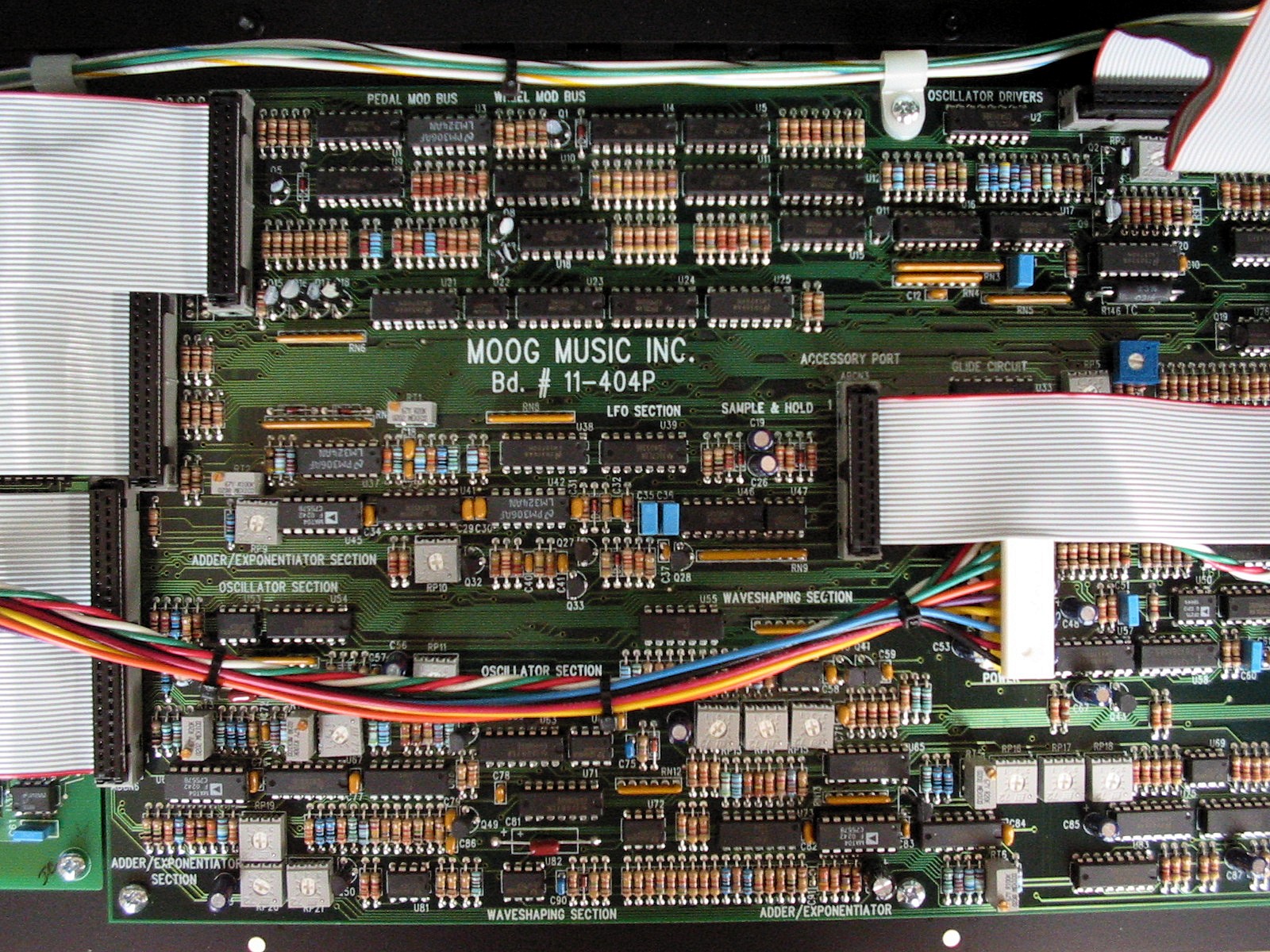
The left half of the analog board. This board does feature some labels like "Glide circuit" and "Oscillator section", ...
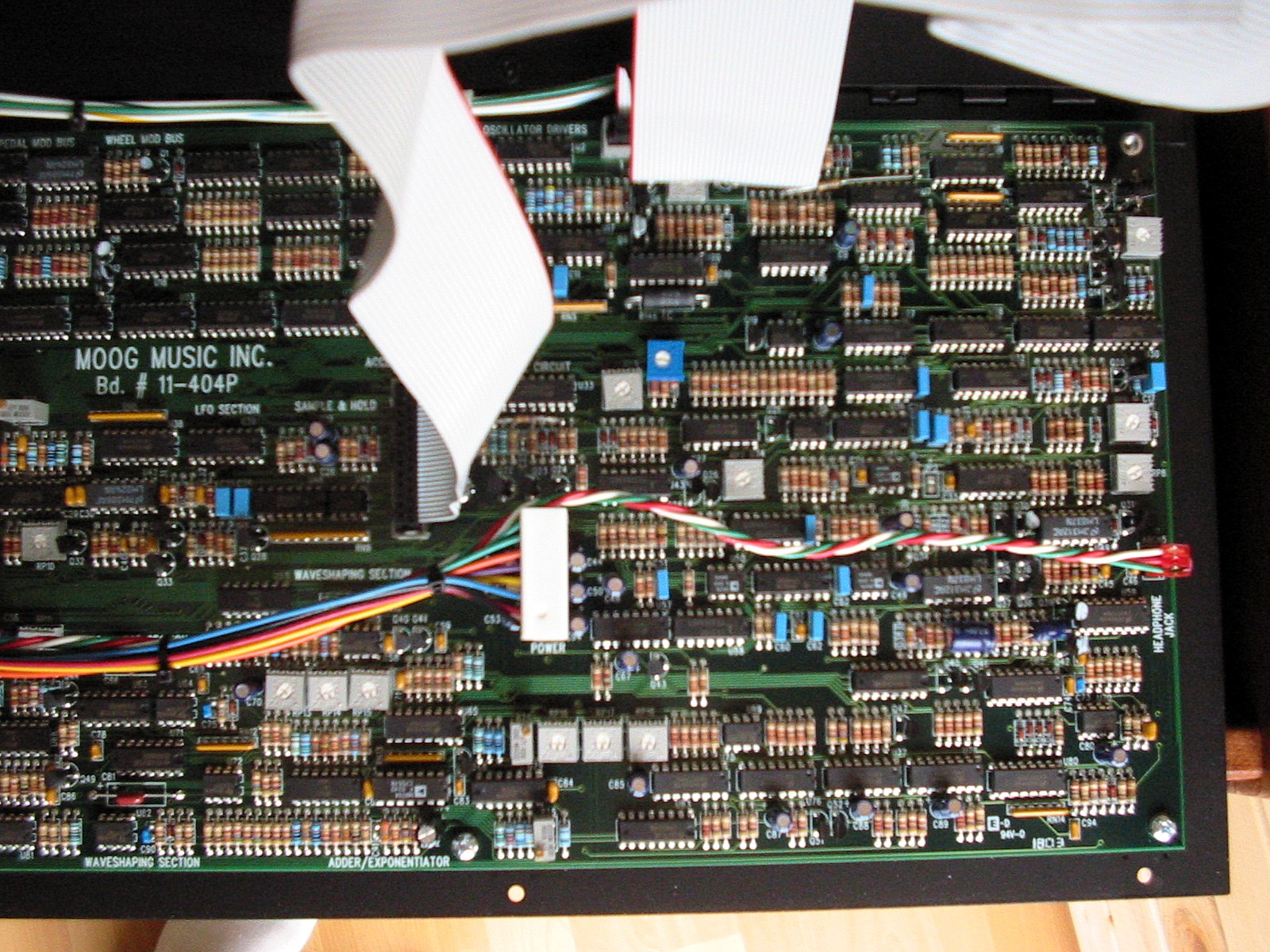
... but there is no label named "filter" or something like that.
The Moog filter transistors are constructed from the CA3086 transistor array.
So the filter transistors are not descrete. If this is a bad or good thing depends on your personal view. See many long threads at certain web forums.
Anyway, the Moog Source also used one transistor array chips (a CA3046) as well for the needed matched pair of transistors on top and bottom of the famous Moog ladder filter. And we all know this didn't sound bad than nor today.